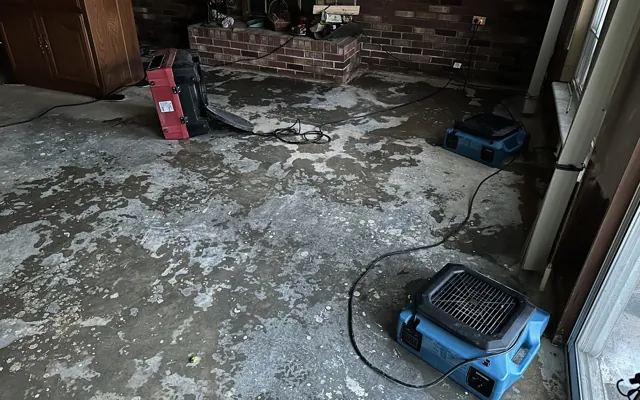
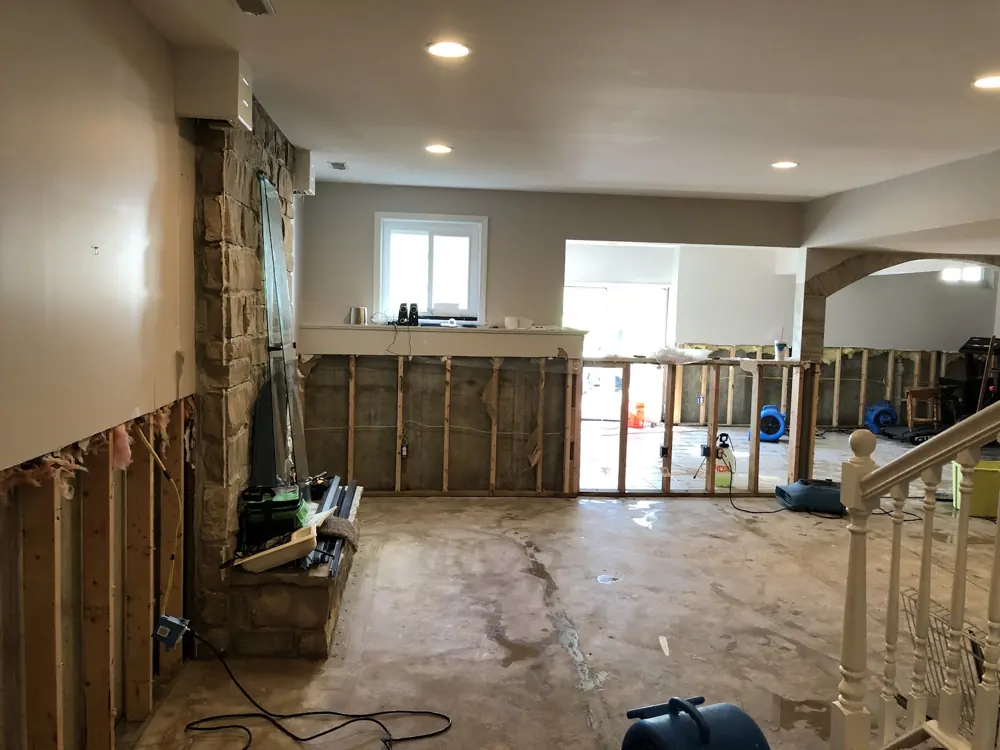
North Texas thunderstorms bring hail, wind, and flash flooding that drive water into Fort Worth homes. Local crews respond fast to extract, sanitize where needed, and dry the structure before mold sets in.

A crew arrives as conditions allow, checks for electrical and structural hazards, and confirms the water has receded before entering to begin extraction.
Standing water is pumped and extracted, and mud, silt, and unsalvageable porous materials left by contaminated storm water are removed from the structure.
Where flood water carried contaminants, affected surfaces are cleaned and treated with antimicrobial products before drying begins.
Air movers and dehumidifiers dry the slab, framing, and salvageable materials, and moisture is verified daily with everything documented for the claim.

While help is on the way, these first steps, done only where it is safe, limit the damage and protect the insurance claim.
Shut the supply off at the source, or close the home's main valve if the source is not obvious. Stopping the flow limits the damage more than anything else.
Switch off electricity to the affected area, but only if the breaker can be reached without standing in or touching the water.
Get a crew dispatched right away. The sooner extraction and drying begin, the more flooring, drywall, and belongings can be saved.
Take photos and a short video of the water and the affected rooms before anything is moved, so the insurance claim starts strong.
Storm and flood cleanup in Fort Worth varies widely, often from about $1,500 to $10,000 or more, depending on how much water entered, whether it was clean rain or contaminated runoff, and how much finish material must be removed. A wind-driven roof leak is at the lower end, while flash flooding across a ground floor costs more. Storm damage from above is commonly covered by homeowners insurance, while rising flood water usually needs separate flood coverage, and the crew documents readings for the carrier.
Crews reach Fort Worth, Tarrant County, and the surrounding North Texas communities fast, from Fairmount, the Near Southside, and Arlington Heights to Benbrook, North Richland Hills, Hurst, and Arlington. See the full list on the areas served across Fort Worth page.
See all areas servedEvery loss is photographed, measured, and logged from the first visit, so the paperwork holds up with the insurance carrier.
Technicians follow recognized IICRC drying standards and prove it with daily moisture readings on Fort Worth homes, not guesswork.
Emergency dispatch any hour of the day or night, with a real crew on the way across North Texas, not a callback in the morning.
A real crew dispatched any hour, not a callback in the morning.
Trained technicians following recognized IICRC drying standards.
Truck-mounted, portable, and submersible for any size loss.
The loss is documented and billed to the carrier directly.
As soon as it is safe. Standing water and high humidity feed mold within a day or two, and the longer materials stay wet, the more must be removed. Crews begin once flood water recedes and electrical and structural hazards have been checked.
Often, yes. Water that runs off streets and yards or rises from creeks and the Trinity River picks up mud, sewage, and chemicals. That makes it unsafe to dry in place, so porous materials it soaked are removed and surfaces are cleaned with antimicrobial products before drying.
It depends on how the water entered. Damage from wind and hail opening the roof is commonly covered by a homeowners policy, while rising flood water from creeks or drainage usually requires a separate flood policy. The crew documents the source and readings for the carrier.
Hard surfaces, framing, and many contents can often be cleaned, dried, and kept if work starts quickly. Porous items that soaked up contaminated water, like carpet, pad, and lower drywall, are usually removed. Fast extraction gives more of the structure and belongings a chance.
Fort Worth crews are on call 24 hours a day, local and fast, and can be on the way within the hour.
Call (817) 396-7052