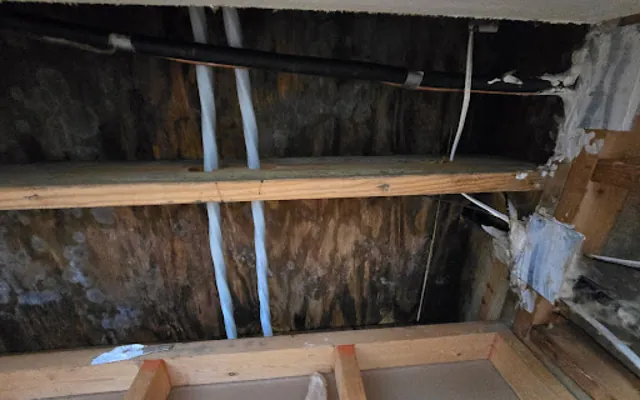
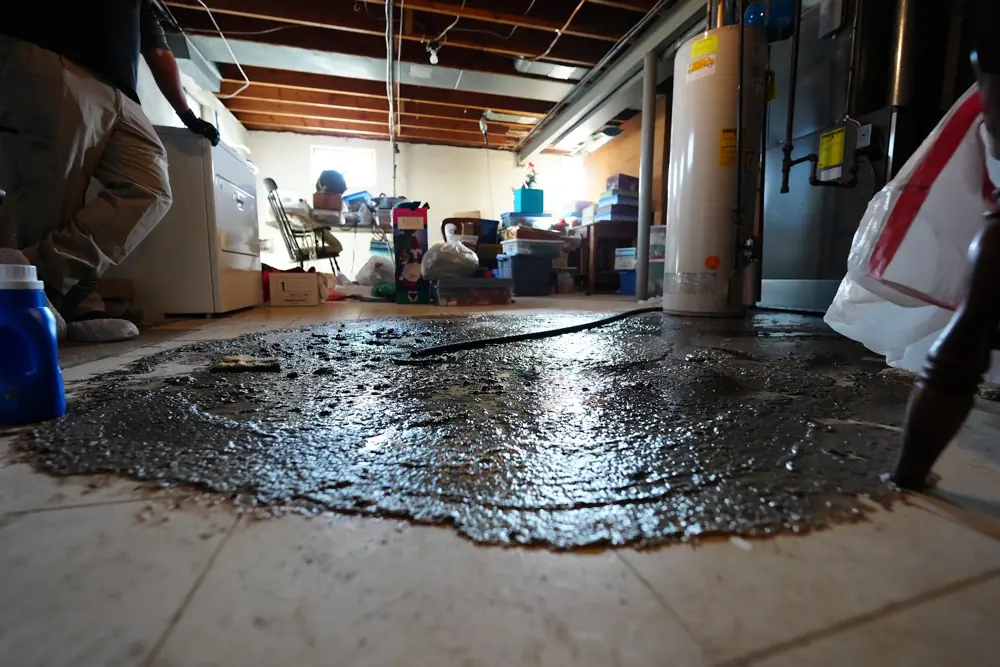
Most Fort Worth homes run air handlers and water lines through the attic, so a hail-torn roof, a frozen line, or a clogged condensate drain can soak insulation and ceilings quietly for days before anyone notices.

Dispatch runs any hour, and a crew is usually on site in about an hour to find whether the water is coming from the roof, a supply line, or the HVAC condensate drain.
Saturated blown-in or batt insulation holds water and loses its R-value, so the technicians bag and remove it to expose the framing and ceiling deck underneath.
Air movers and dehumidifiers are staged in the attic and the rooms below, drawing moisture out of rafters, decking, and the drywall ceiling before rot or mold can set in.
Readings are taken across the framing and ceiling each day until every surface reads dry, and the crew logs photos and numbers for the insurance claim.

While help is on the way, these first steps, done only where it is safe, limit the damage and protect the insurance claim.
Shut the supply off at the source, or close the home's main valve if the source is not obvious. Stopping the flow limits the damage more than anything else.
Switch off electricity to the affected area, but only if the breaker can be reached without standing in or touching the water.
Get a crew dispatched right away. The sooner extraction and drying begin, the more flooring, drywall, and belongings can be saved.
Take photos and a short video of the water and the affected rooms before anything is moved, so the insurance claim starts strong.
Attic water damage cleanup in Fort Worth usually runs from about $1,200 to $5,000, driven by how much insulation is soaked, whether the ceiling below has to be opened, and how far water traveled into wall cavities. A small condensate drip costs far less than a storm-torn roof that wet an entire attic bay. Sudden, accidental losses are commonly covered by homeowners insurance, and the crew documents moisture readings and photos for the carrier.
Crews reach Fort Worth, Tarrant County, and the surrounding North Texas communities fast, from Fairmount, the Near Southside, and Arlington Heights to Benbrook, North Richland Hills, Hurst, and Arlington. See the full list on the areas served across Fort Worth page.
See all areas servedEvery loss is photographed, measured, and logged from the first visit, so the paperwork holds up with the insurance carrier.
Technicians follow recognized IICRC drying standards and prove it with daily moisture readings on Fort Worth homes, not guesswork.
Emergency dispatch any hour of the day or night, with a real crew on the way across North Texas, not a callback in the morning.
A real crew dispatched any hour, not a callback in the morning.
Trained technicians following recognized IICRC drying standards.
Truck-mounted, portable, and submersible for any size loss.
The loss is documented and billed to the carrier directly.
Water in an attic often soaks insulation and framing well before it shows on the ceiling below. By the time a brown stain appears, the material above has usually been wet for days, which is why an early moisture inspection matters after any storm or freeze.
Usually, yes. Saturated blown-in or batt insulation holds water against the framing, loses its R-value, and dries very slowly. Removing it lets the crew dry the rafters and ceiling deck properly and helps prevent mold from taking hold in the attic.
Dispatch runs 24/7 with typical arrival in about an hour anywhere in Fort Worth or Tarrant County, because attic water spreads into ceilings and wall cavities quickly and early drying limits the damage.
Sudden, accidental water damage from a storm, a burst line, or a failed condensate drain is commonly covered under homeowners policies. Moisture readings and photos are documented so the claim can go straight to the carrier.
Fort Worth crews are on call 24 hours a day, local and fast, and can be on the way within the hour.
Call (817) 396-7052