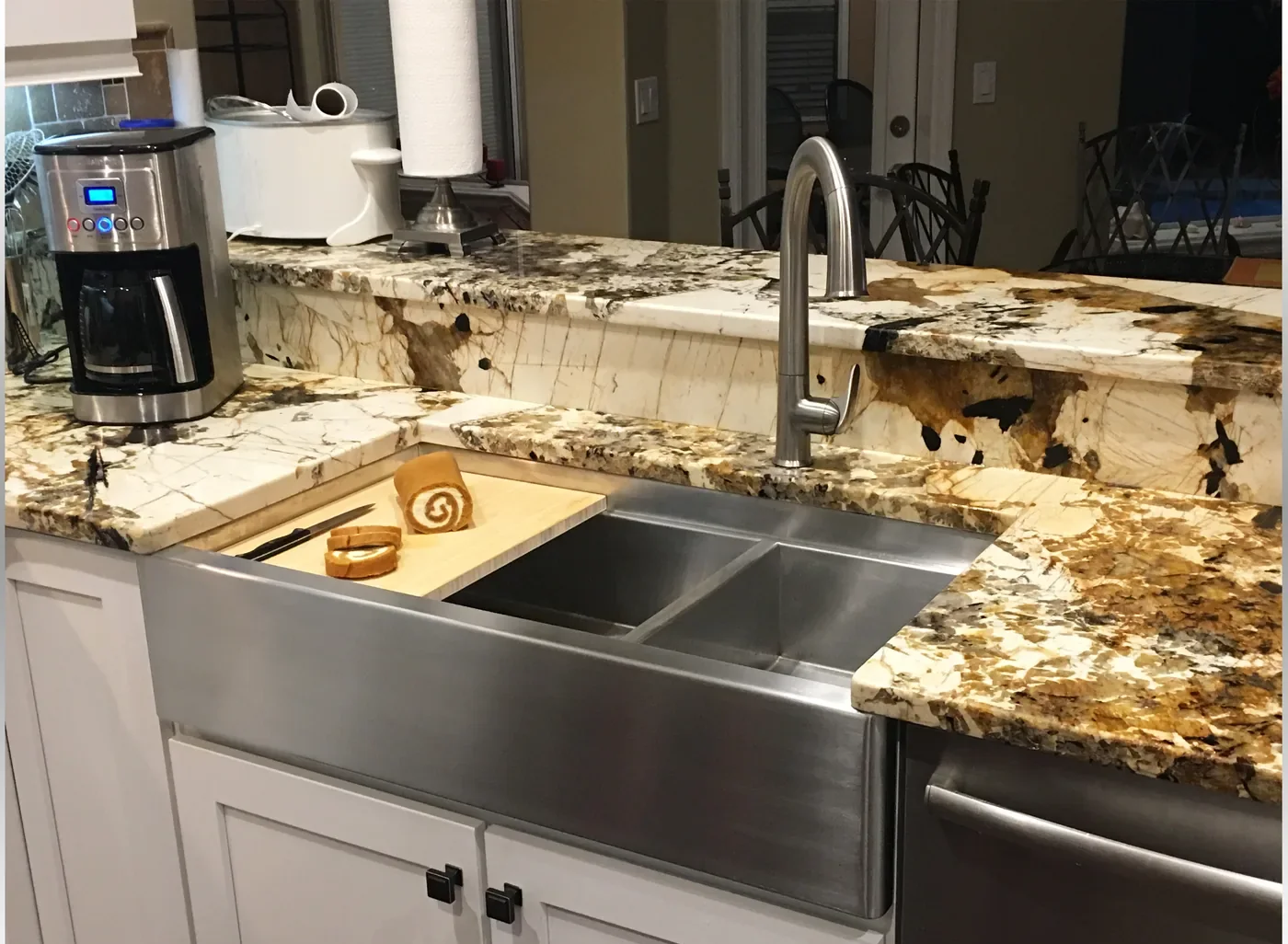
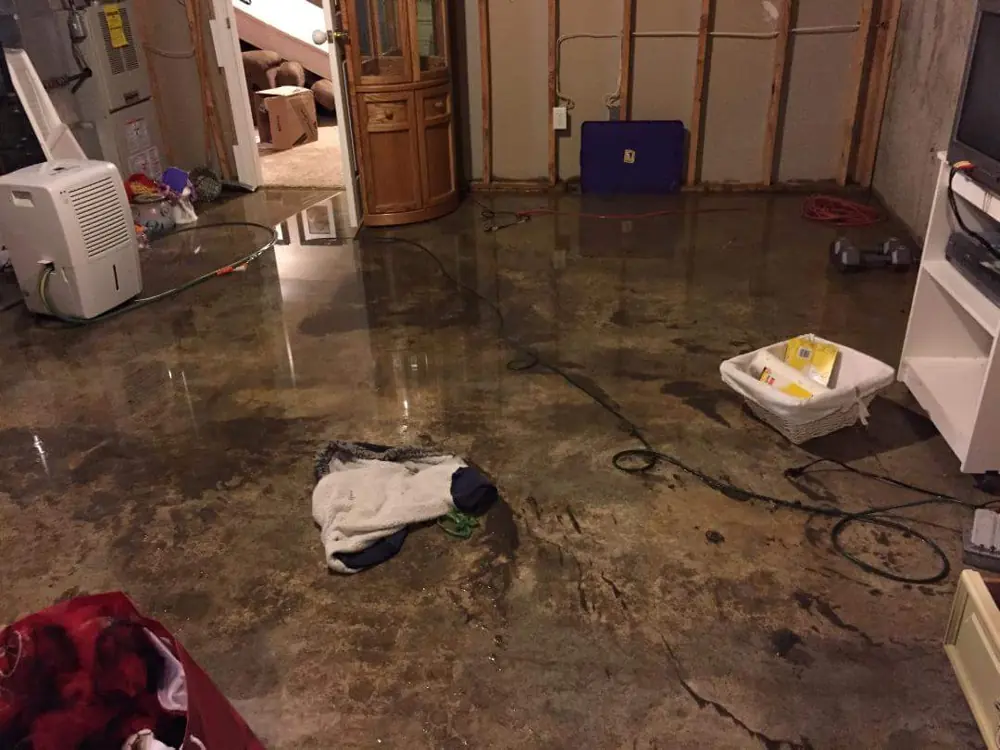
A kitchen sink that overflows or a supply line that fails under the cabinet can flood a Fort Worth kitchen quickly, soaking the cabinet run and slab floor. Fast extraction and drying protect the cabinetry.

A crew arrives in about an hour, stops the water at the supply valve, and maps how far the overflow spread across the floor and into the cabinet run.
Standing water is extracted from the floor, the sink base, and adjoining cabinets before it wicks deeper into the slab and cabinetry.
The toe kick and cabinet base are opened where needed, and air movers and dehumidifiers dry the base, subfloor, and baseboards from the inside.
Moisture is checked daily until the cabinets and floor read dry, and photos and readings are documented for an insurance claim if filed.

While help is on the way, these first steps, done only where it is safe, limit the damage and protect the insurance claim.
Shut the supply off at the source, or close the home's main valve if the source is not obvious. Stopping the flow limits the damage more than anything else.
Switch off electricity to the affected area, but only if the breaker can be reached without standing in or touching the water.
Get a crew dispatched right away. The sooner extraction and drying begin, the more flooring, drywall, and belongings can be saved.
Take photos and a short video of the water and the affected rooms before anything is moved, so the insurance claim starts strong.
A kitchen sink overflow in Fort Worth usually runs from about $600 to $3,000, depending on how long the water ran and whether it reached the cabinet run, subfloor, or a ceiling below. A quick catch on a tile floor is at the low end, while a soaked cabinet run and cupped wood floors raise the total. Sudden, accidental overflows are often covered by homeowners insurance, and the crew documents readings and photos for the carrier.
Crews reach Fort Worth, Tarrant County, and the surrounding North Texas communities fast, from Fairmount, the Near Southside, and Arlington Heights to Benbrook, North Richland Hills, Hurst, and Arlington. See the full list on the areas served across Fort Worth page.
See all areas servedEvery loss is photographed, measured, and logged from the first visit, so the paperwork holds up with the insurance carrier.
Technicians follow recognized IICRC drying standards and prove it with daily moisture readings on Fort Worth homes, not guesswork.
Emergency dispatch any hour of the day or night, with a real crew on the way across North Texas, not a callback in the morning.
A real crew dispatched any hour, not a callback in the morning.
Trained technicians following recognized IICRC drying standards.
Truck-mounted, portable, and submersible for any size loss.
The loss is documented and billed to the carrier directly.
Shut off the water at the supply valve under the sink and stop using the disposal and dishwasher, since both drain through the same area. Clear items off the wet floor and out of the cabinet, then call for extraction before the water wicks deeper into the run.
Not always. If drying starts before the particleboard base swells and delaminates, a crew can often save the run by opening the base and drying it from the inside. Cabinets that stayed wet for a long time are more likely to need replacement.
In a two-story home, yes. An overflow can drop through the floor and into the ceiling below, so crews check the level beneath an upstairs kitchen or wet bar and dry both if moisture is found.
A sudden, accidental overflow is commonly covered under homeowners policies, while a slow leak ignored over time may not be. The crew documents moisture readings and photos so a covered claim can be submitted straight to the carrier.
Fort Worth crews are on call 24 hours a day, local and fast, and can be on the way within the hour.
Call (817) 396-7052