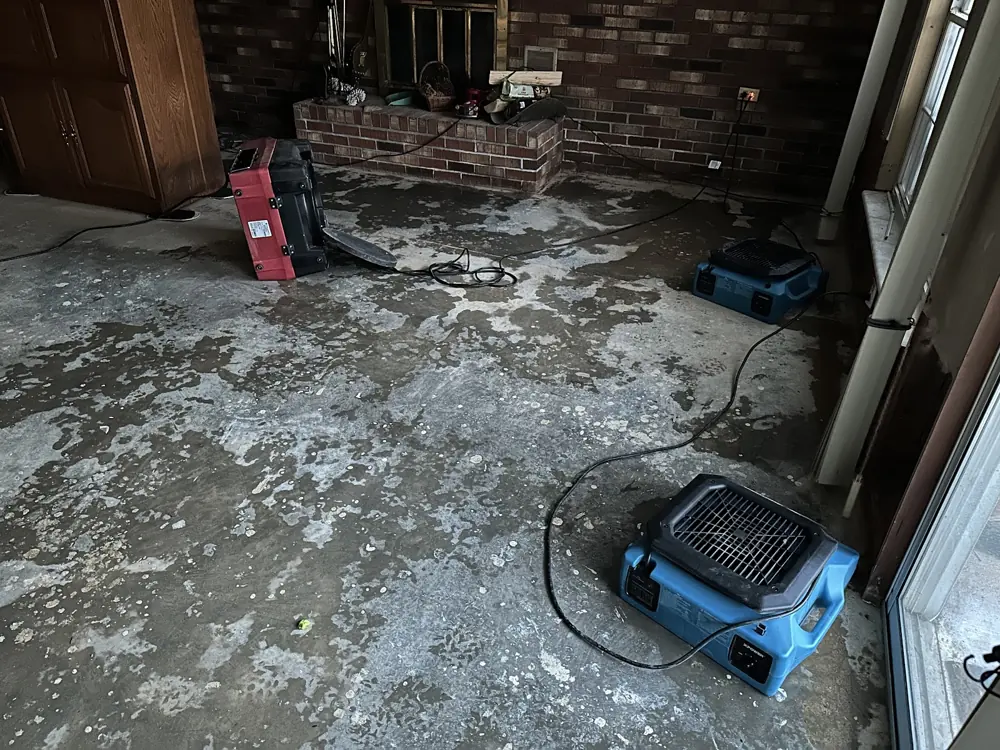
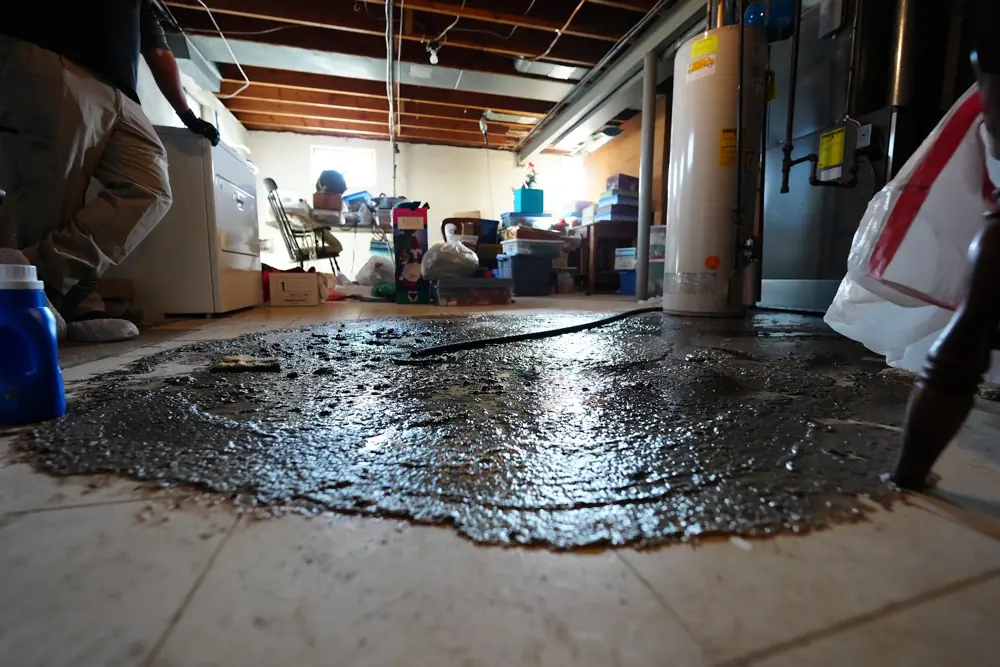
Fort Worth garages take on water from storm runoff under the door and from the water heaters and washers often housed there. Fast extraction and drying protect the slab, drywall, and anything stored inside.

A crew arrives in about an hour and determines whether the water came from storm runoff, the water heater, a washer, or a supply line before extraction begins.
Standing water is extracted from the slab, and stored items are moved so the floor can be cleared and the lower walls reached for drying.
Where water wicked into drywall, the lower wall is opened as needed, and air movers and dehumidifiers dry the slab, framing, and any shared wall with the house.
Moisture is checked daily until the slab and framing read dry, and photos and readings are documented for the insurance claim.

While help is on the way, these first steps, done only where it is safe, limit the damage and protect the insurance claim.
Shut the supply off at the source, or close the home's main valve if the source is not obvious. Stopping the flow limits the damage more than anything else.
Switch off electricity to the affected area, but only if the breaker can be reached without standing in or touching the water.
Get a crew dispatched right away. The sooner extraction and drying begin, the more flooring, drywall, and belongings can be saved.
Take photos and a short video of the water and the affected rooms before anything is moved, so the insurance claim starts strong.
Garage water damage cleanup in Fort Worth usually runs from about $700 to $3,500, depending on how much water entered, whether it reached finished drywall, and if it spread into the adjoining living space. Runoff on a bare slab is at the low end, while a water heater failure that wet shared walls costs more. Sudden, accidental losses are commonly covered by homeowners insurance, and the crew documents readings and photos for the carrier.
Crews reach Fort Worth, Tarrant County, and the surrounding North Texas communities fast, from Fairmount, the Near Southside, and Arlington Heights to Benbrook, North Richland Hills, Hurst, and Arlington. See the full list on the areas served across Fort Worth page.
See all areas servedEvery loss is photographed, measured, and logged from the first visit, so the paperwork holds up with the insurance carrier.
Technicians follow recognized IICRC drying standards and prove it with daily moisture readings on Fort Worth homes, not guesswork.
Emergency dispatch any hour of the day or night, with a real crew on the way across North Texas, not a callback in the morning.
A real crew dispatched any hour, not a callback in the morning.
Trained technicians following recognized IICRC drying standards.
Truck-mounted, portable, and submersible for any size loss.
The loss is documented and billed to the carrier directly.
The garage sits at the low edge of the house, so when heavy rain falls faster than the driveway and yard can drain, runoff pools against the door and seeps under it onto the slab. Improving grading and drainage around the door helps, but a strong storm can still push water inside.
It can. The wall between the garage and the living space is often shared, so water wicking into that drywall can move into the adjoining room. Drying the garage promptly keeps a wet slab and lower wall from spreading moisture into finished areas.
Boxes, furniture, and appliances at floor level soak up water quickly. The crew moves and assesses contents during extraction, though porous items that sat in contaminated runoff may not be salvageable. Getting them off the wet slab early gives more of them a chance.
Sudden, accidental losses from a water heater, washer, or supply line are commonly covered, while flooding from outside runoff may fall under separate flood coverage. The crew documents the source, readings, and photos so the carrier can review the claim.
Fort Worth crews are on call 24 hours a day, local and fast, and can be on the way within the hour.
Call (817) 396-7052