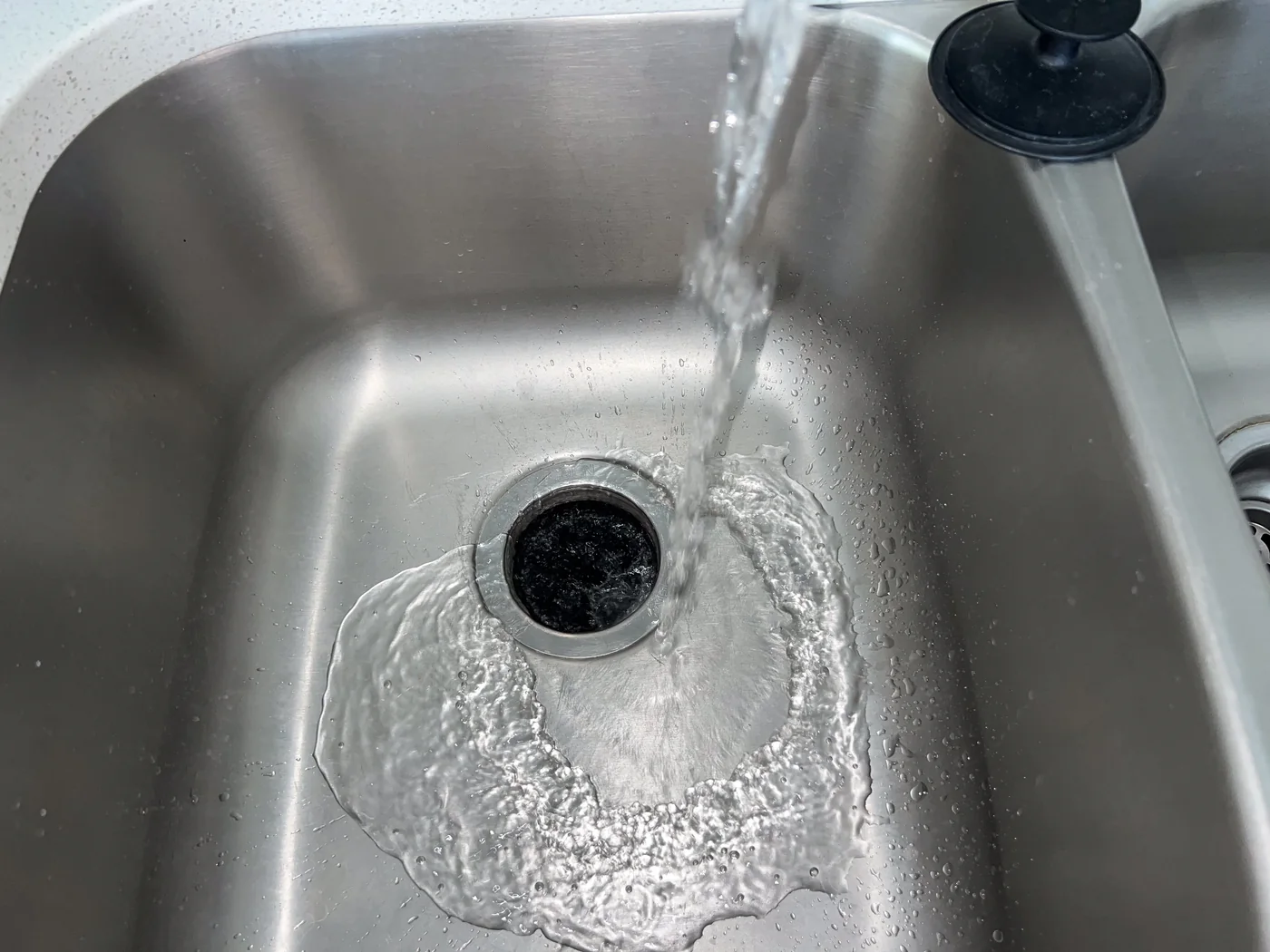
A dripping faucet or a leaking fixture connection seems minor, but under a slab-home sink or behind a wall it can soak cabinets and framing for weeks. Early drying prevents swollen cabinetry and mold.

A crew arrives in about an hour, shuts the fixture supply, and uses moisture meters to map how far the slow leak has spread into cabinets, floors, and walls.
Pooled water is extracted, and the cabinet base or a section of wall is opened where needed to reach the damp framing and materials the leak reached.
Air movers and dehumidifiers dry the cabinet cavity, baseboards, subfloor, or wall from the inside, drawing out moisture the surface never showed.
Moisture is checked daily until every affected material reads dry, and photos and readings are documented so a claim can be submitted if filed.

While help is on the way, these first steps, done only where it is safe, limit the damage and protect the insurance claim.
Shut the supply off at the source, or close the home's main valve if the source is not obvious. Stopping the flow limits the damage more than anything else.
Switch off electricity to the affected area, but only if the breaker can be reached without standing in or touching the water.
Get a crew dispatched right away. The sooner extraction and drying begin, the more flooring, drywall, and belongings can be saved.
Take photos and a short video of the water and the affected rooms before anything is moved, so the insurance claim starts strong.
A faucet or fixture leak in Fort Worth usually runs from about $500 to $2,800, depending on how long it dripped and whether it reached the cabinet, subfloor, or wall framing. A quick catch under a sink is at the low end, while a long-hidden leak that swelled a cabinet and grew mold costs more. Sudden leaks are often covered by homeowners insurance, while slow long-term seepage may not be, and the crew documents readings for the carrier.
Crews reach Fort Worth, Tarrant County, and the surrounding North Texas communities fast, from Fairmount, the Near Southside, and Arlington Heights to Benbrook, North Richland Hills, Hurst, and Arlington. See the full list on the areas served across Fort Worth page.
See all areas servedEvery loss is photographed, measured, and logged from the first visit, so the paperwork holds up with the insurance carrier.
Technicians follow recognized IICRC drying standards and prove it with daily moisture readings on Fort Worth homes, not guesswork.
Emergency dispatch any hour of the day or night, with a real crew on the way across North Texas, not a callback in the morning.
A real crew dispatched any hour, not a callback in the morning.
Trained technicians following recognized IICRC drying standards.
Truck-mounted, portable, and submersible for any size loss.
The loss is documented and billed to the carrier directly.
Often, yes. A slow drip under a sink or inside a wall can soak the cabinet base or framing for weeks before anything shows. By the time a stain or musty smell appears, the material may be saturated, so early drying keeps a small leak from becoming a cabinet or drywall replacement.
Technicians use moisture meters and thermal imaging to map dampness behind cabinets and walls, then open only the area needed to reach it. This pinpoints how far the water traveled so the drying targets the actual wet material rather than guessing.
Frequently, if drying starts before the particleboard swells and comes apart. Opening the cabinet base and drying from the inside preserves the cabinetry in many cases. Cabinets that have stayed wet for a long time may delaminate and need replacing.
A sudden failure that releases water is commonly covered, while a slow leak neglected over time is often excluded as a maintenance issue. The crew documents the source, moisture readings, and photos so the carrier can evaluate the claim.
Fort Worth crews are on call 24 hours a day, local and fast, and can be on the way within the hour.
Call (817) 396-7052