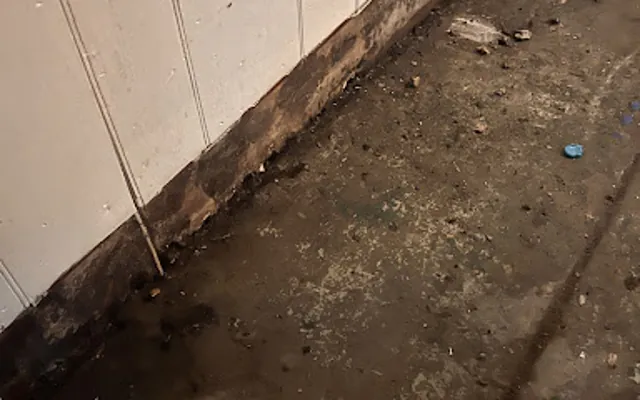
Homes on the outskirts of Fort Worth and Tarrant County run on septic systems, and a saturated drain field can back sewage into the house. Fast extraction, sanitizing, and drying make the home safe again.

A crew arrives in about an hour, stops water use, and contains the affected area so the contaminated backup does not spread through the house.
Contaminated water and solids are extracted, and porous materials that absorbed the backup, such as carpet, pad, and lower drywall, are bagged and removed.
All affected hard surfaces are cleaned and treated with antimicrobial products, since septic water carries bacteria that a simple wipe-down cannot address.
Air movers and dehumidifiers dry the slab, framing, and salvageable materials, and moisture is verified daily with everything documented for the claim.

While help is on the way, these first steps, done only where it is safe, limit the damage and protect the insurance claim.
Shut the supply off at the source, or close the home's main valve if the source is not obvious. Stopping the flow limits the damage more than anything else.
Switch off electricity to the affected area, but only if the breaker can be reached without standing in or touching the water.
Get a crew dispatched right away. The sooner extraction and drying begin, the more flooring, drywall, and belongings can be saved.
Take photos and a short video of the water and the affected rooms before anything is moved, so the insurance claim starts strong.
Septic backup cleanup in Fort Worth usually runs from about $2,000 to $8,000, depending on how much contaminated water entered, how far it spread, and how much porous material must be removed and sanitized. A contained backup in one room is at the low end, while sewage across finished living space costs more. Coverage depends on the policy and any sewer or septic backup endorsement, and the crew documents readings and photos for the carrier.
Crews reach Fort Worth, Tarrant County, and the surrounding North Texas communities fast, from Fairmount, the Near Southside, and Arlington Heights to Benbrook, North Richland Hills, Hurst, and Arlington. See the full list on the areas served across Fort Worth page.
See all areas servedEvery loss is photographed, measured, and logged from the first visit, so the paperwork holds up with the insurance carrier.
Technicians follow recognized IICRC drying standards and prove it with daily moisture readings on Fort Worth homes, not guesswork.
Emergency dispatch any hour of the day or night, with a real crew on the way across North Texas, not a callback in the morning.
A real crew dispatched any hour, not a callback in the morning.
Trained technicians following recognized IICRC drying standards.
Truck-mounted, portable, and submersible for any size loss.
The loss is documented and billed to the carrier directly.
When the ground around the drain field is saturated, the soil cannot absorb any more treated water. With nowhere to go, wastewater backs up toward the house. Fort Worth's slow-draining clay soil makes this worse, so prolonged rain is a common trigger for septic backups here.
Yes. It carries bacteria and other contaminants, so it is treated as a biohazard. Porous materials that soaked it up, like carpet and pad, are removed, and hard surfaces are cleaned with antimicrobial products. It should not be handled or dried in place without proper sanitizing.
Stop using water and flushing, since each use adds to the backup. Keep people and pets away from the contaminated area, and do not try to wet-vacuum sewage yourself. Ventilate the space if you safely can, and wait for extraction and sanitizing.
Standard homeowners policies often exclude backups unless a sewer or septic backup endorsement is in place, so coverage varies. The crew documents the source, moisture readings, and photos so the claim can be submitted and reviewed by the carrier.
Fort Worth crews are on call 24 hours a day, local and fast, and can be on the way within the hour.
Call (817) 396-7052